

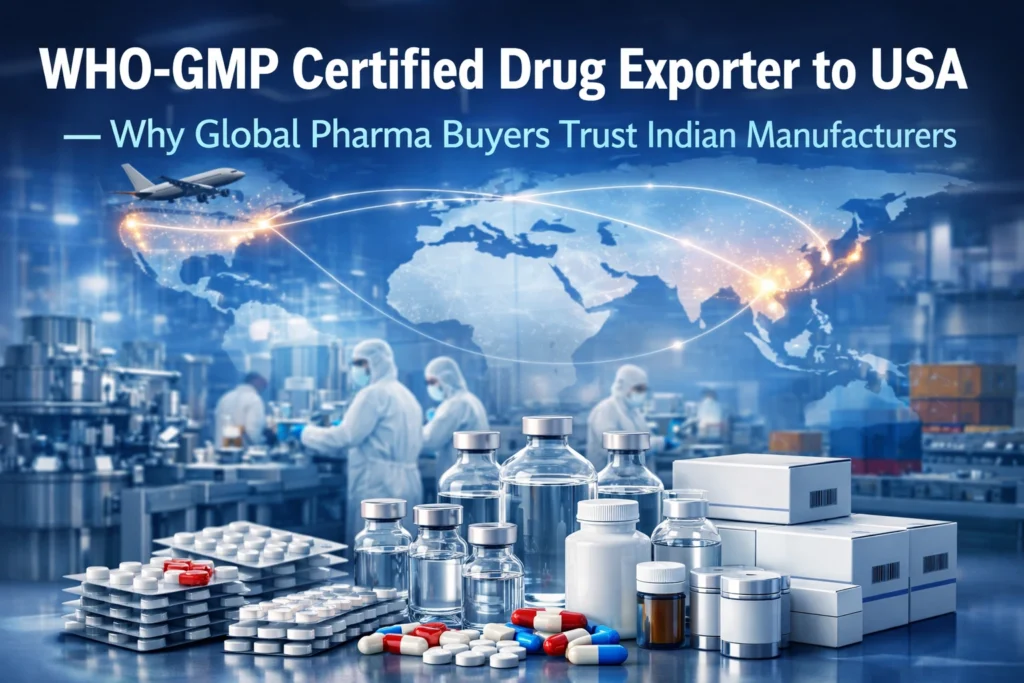
Introduction — Why the USA Imports Medicines from India
The United States is the largest pharmaceutical market in the world, yet it depends significantly on imports for cost effective and high quality medicines. A major share of this supply comes from India, which contributes over 40% of generic drugs used in the US and more than 10% of total pharmaceutical imports.
This growing reliance is not accidental. Indian pharmaceutical manufacturers have built a strong reputation for producing affordable, high quality medicines that meet global regulatory standards. One of the most important quality benchmarks behind this trust is WHO-GMP certification.
A WHO-GMP Certified Drug Exporter to USA represents a supplier that follows internationally recognized manufacturing practices. This ensures consistent quality, safety, and compliance across all exported pharmaceutical products.
This guide explains what WHO-GMP certification means, why it matters to US importers, how Indian exporters maintain compliance, and what factors global buyers consider when selecting a reliable pharmaceutical exporter from India to USA.
What is WHO-GMP Certification? A Complete Introduction
What Does WHO-GMP Mean?
WHO-GMP refers to the Good Manufacturing Practices set by the World Health Organization. It is a globally accepted system that ensures pharmaceutical products are consistently produced and controlled according to quality standards.
The certification combines
WHO guidelines for global health standards
GMP protocols for manufacturing quality
Together, they create a framework that ensures medicines are safe, effective, and suitable for international markets.
Role of the World Health Organization (WHO)
The World Health Organization plays a key role in defining healthcare standards across more than 190 countries. Its GMP guidelines serve as a benchmark for pharmaceutical manufacturing worldwide.
These guidelines are widely adopted by regulatory authorities and are often considered the minimum requirement for exporting medicines globally.
What Are Good Manufacturing Practices (GMP)?
GMP focuses on maintaining strict quality throughout the production process. Key elements include
Quality Control Systems
Continuous testing of raw materials, in process batches, and finished products
Documentation and Traceability
Complete tracking of every batch from raw material sourcing to final delivery
Facility and Equipment Standards
Cleanrooms, validated machinery, and controlled environments
Personnel Training
Skilled workforce trained in hygiene, safety, and operational procedures
Why WHO-GMP Matters in the Pharmaceutical Industry
WHO-GMP is critical because it ensures
Patient safety
Consistent product quality
Compliance with international regulations
For US importers, it acts as a baseline assurance when sourcing medicines from overseas manufacturers.
Importance of a WHO-GMP Certified Pharmaceutical Company for US Importers
Ensuring Global Quality Standards
US hospitals, distributors, and procurement systems require consistent product quality. WHO-GMP certification ensures that every batch meets the same standards, reducing variability and risk.
Patient Safety and Product Efficacy
Strict adherence to WHO-GMP reduces the chances of contamination, incorrect dosage, or substandard medicines. This directly impacts patient safety and treatment outcomes.
Regulatory Acceptance Worldwide — Including the USA
WHO-GMP certification is widely recognized across regulatory frameworks. While USFDA approval is essential for certain products, WHO-GMP simplifies documentation and builds trust during the import process.
WHO-GMP Certification Process — How Indian Exporters Get Certified
Application and Documentation
The process begins with detailed documentation such as
- Standard Operating Procedures
- Batch manufacturing records
- Quality manuals
- Facility master files
These documents demonstrate that the manufacturer follows structured quality systems.
Facility Inspection and Audit
Regulatory authorities conduct on site inspections of
- Manufacturing units
- Laboratories
- Storage facilities
- Hygiene and safety practices
Auditors verify compliance with WHO-GMP standards at every level.
Approval and Continuous Compliance
Certification is granted only after successful inspection. However, it is not permanent.
- Periodic audits are required
- Corrective and preventive actions must be implemented
- Continuous documentation must be maintained
WHO-GMP vs Other Certifications — What US Buyers Need to Know
WHO-GMP vs USFDA
- WHO-GMP is a global manufacturing standard
- USFDA focuses specifically on the US market
WHO-GMP ensures baseline quality, while USFDA approval is required for certain regulated products entering the US.
WHO-GMP vs EU-GMP
- EU-GMP is often stricter in specific regulatory areas
- WHO-GMP is widely accepted for most global exports
Which Certification Is Best for Global Markets?
For US buyers, the ideal combination is
- WHO-GMP certification for manufacturing quality
- FDA registration for regulatory compliance
Essential Characteristics of a WHO-GMP Accredited Pharmaceutical Firm
State-of-the-Art Manufacturing Facilities
WHO-GMP certified companies operate advanced facilities with
- Controlled cleanroom environments
- Validated production equipment
- Temperature controlled storage systems
Skilled Technical and Quality Teams
These companies employ
- Qualified pharmacists
- Quality assurance professionals
- Trained technical staff
Regular training ensures compliance with evolving standards.
Robust Quality Assurance Systems
Quality assurance includes
- Certificate of Analysis for every batch
- Third party testing
- Full product traceability
Products Exported by WHO-GMP Certified Companies to the USA
Tablets and Capsules
These are the most commonly exported products, including
- Generic medicines
- Branded generics
- Specialty formulations
Syrups and Oral Liquids
Widely used in pediatric and specialty treatments, requiring strict stability standards.
Injectables and Sterile Products
Highly regulated category where WHO-GMP compliance is essential for safety and approval.
Topical and External Preparations
Includes creams, ointments, and gels used in dermatology and wound care.
India as a WHO-GMP Pharma Hub — Why the USA Relies on Indian Exporters
Why Does the US Import Medicines from India?
Several factors contribute to this reliance
- Cost Advantage
Medicines from India are significantly more affordable
- Manufacturing Expertise
India contributes significantly to the worldwide supply of generic medications.
- Regulatory Strength
High number of FDA approved facilities outside the US
- Scalable Production
Ability to meet large volume demand
Export Opportunities from WHO-GMP Certified Units in India
India has
- Thousands of WHO-GMP certified units
- Hundreds of FDA approved facilities
This makes it one of the largest pharmaceutical export hubs globally.
India’s Pharmaceutical Exports to the USA — Enhancing Global Health Connections
Exports include
- Generic medicines
- Active pharmaceutical ingredients
- Over the counter products
- Specialty drugs
The trade relationship continues to grow steadily.
Procedure for Importing Pharmaceutical Products from India to the USA
The process involves several steps
- Identify a WHO-GMP and FDA compliant supplier
- Verify product documentation and quality certificates
- Obtain necessary import licenses
- Complete regulatory filings and customs clearance
- Ensure proper packaging and logistics arrangements
Why Rizochem Is the Prime Choice as a WHO-GMP Certified Drug Exporter to USA
In the global pharmaceutical export ecosystem, certain companies stand out due to consistent compliance and operational reliability.
Key factors include
- Experience in international pharma exports
- Strong network of certified manufacturing partners
- Ability to handle temperature sensitive shipments
- Wide product portfolio including critical therapies
- Compliance with documentation and regulatory processes
Such characteristics help ensure smooth supply chains and long term trust in global markets.
Benefits for US Clients and Importers Working with WHO-GMP Certified Exporters
Easier Product Registration
WHO-GMP certification simplifies regulatory documentation, reducing approval time.
Trust and Brand Credibility
Certified exporters are perceived as reliable partners, reducing due diligence efforts.
Long-Term Business Partnerships
Consistent quality leads to stable supply agreements and long term collaborations.
Challenges Faced by WHO-GMP Certified Companies & How Buyers Can Mitigate Them
Maintaining Continuous Compliance
Regular audits and documentation updates are required. Buyers should request updated compliance records.
High Operational and Quality Costs
Maintaining certification is expensive, but it reflects commitment to quality.
Supply Chain Disruption Risks
Reliable exporters mitigate risks through
- Multiple sourcing options
- Inventory management
- Efficient logistics systems
Future of WHO-GMP Certified Pharmaceutical Exporters
Rising Global Demand
Demand for affordable medicines continues to grow, especially in developed markets.
Indian pharmaceutical exports to the US are expected to increase steadily over the coming years.
Innovation and Digital Quality Systems
Modern technologies such as
- AI driven quality control
- Digital batch records
- Blockchain traceability
are transforming compliance and transparency.
Conclusion
WHO-GMP certification serves as a foundational trust indicator in the global pharmaceutical trade. For US importers, it ensures that medicines sourced from international markets meet strict quality and safety standards.
India’s strong manufacturing base, combined with WHO-GMP compliance, has positioned it as a key supplier for the US healthcare system.
Among exporters operating in this ecosystem, companies like Rizochem contribute to global supply chains by working with certified manufacturing partners and maintaining consistent export practices aligned with international standards.
FAQs
What is WHO-GMP certification?
WHO-GMP is a global standard defined by the World Health Organization that ensures pharmaceutical products are manufactured safely, consistently, and with high quality.
Is WHO-GMP mandatory for pharmaceutical exports to the USA?
It is not mandatory in all cases, but it is widely preferred and often required by importers as a baseline quality standard.
How long is WHO-GMP certification valid?
Typically valid for two to three years, subject to regular audits and compliance checks.
Can a small pharmaceutical company get WHO-GMP certified?
Yes, certification depends on quality systems and compliance, not company size.
Why do US importers prefer WHO-GMP certified pharmaceutical companies?
Because it ensures consistent quality, reduces risk, and simplifies regulatory processes during import.
About the Author
Rizochemwebsite focuses on pharmaceutical export insights, regulatory understanding, and global trade education within the healthcare industry.