

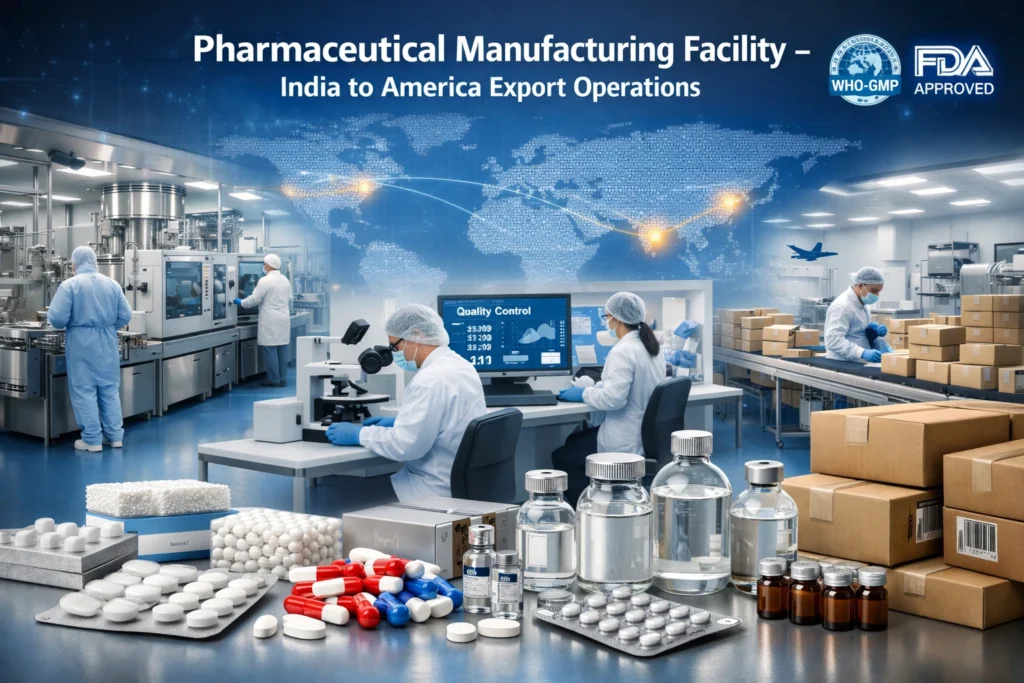
Introduction
The global Pharmaceutical Company Exporting from India to America continues to evolve, and one of the most significant dynamics reshaping the industry is the growing partnership between Indian pharmaceutical manufacturers and American healthcare systems. Today, the United States imports a substantial portion of its medications from India, making the connection between these two nations a critical lifeline for affordable, accessible healthcare.
If you’re exploring options for sourcing medicines from an Indian pharmaceutical company exporting to America, or you’re trying to understand how this international trade works, this comprehensive guide is designed specifically for you. We’ll walk through every aspect of this relationship—from how Indian pharmaceutical companies operate their export businesses to the regulatory frameworks that ensure quality, the logistics involved, and the practical steps you need to take to establish a reliable supply chain.
This isn’t just another overview. Throughout this article, we’ve compiled insights from industry operations, regulatory documentation, and practical sourcing experiences to give you information you can actually use when evaluating pharmaceutical companies from India exporting to the USA.
Why Indian Pharmaceutical Companies Export to America: Understanding the Market Dynamic
The Foundation of India’s Pharmaceutical Dominance
India has earned its position as one of the world’s most trusted pharmaceutical suppliers, and there are concrete reasons why American hospitals, clinics, and healthcare systems continue to depend on medicines manufactured in India. Understanding these reasons helps you appreciate what you’re getting when you source from a quality pharmaceutical company India exporting to American markets.
First, the economics are compelling. Indian pharmaceutical manufacturers operate with established infrastructure, skilled workforce, and efficient production processes that allow them to produce high-quality generic medicines at costs that make healthcare more accessible. This cost advantage doesn’t mean compromised quality—it means optimized operations and lower overhead that translates to savings for American healthcare providers.
Second, India has invested heavily in pharmaceutical manufacturing capabilities over several decades. The country isn’t just producing generic versions of existing medicines; Indian pharmaceutical enterprises are innovating within their therapeutic categories, developing new formulations, and maintaining research capabilities that rival Western standards.
Third, the regulatory recognition is well-established. When a pharmaceutical company based in India meets WHO-GMP standards and FDA requirements, these certifications carry real weight. They’ve been earned through rigorous inspections, documentation reviews, and ongoing compliance monitoring. American healthcare buyers understand this, which is why they continue to partner with quality pharmaceutical manufacturers from India exporting to USA markets.
The American Perspective: Why Healthcare Systems Choose Indian Suppliers
From the American healthcare perspective, the relationship isn’t simply about cost—though cost is certainly a factor. It’s about reliable access to quality medicines that patients need. When a hospital in Texas sources antibiotic medications from a pharmaceutical exporter in India, they’re accessing the same active pharmaceutical ingredients that would cost significantly more if sourced elsewhere.
More importantly, American pharmaceutical distributors and hospital groups have established vetting processes for their Indian suppliers. They conduct facility audits, review quality documentation, verify certifications, and maintain ongoing relationships. This means the pharmaceutical companies successfully exporting from India to American markets have already passed through multiple validation checkpoints before they began regular supply relationships.
The COVID-19 pandemic highlighted this dynamic even more clearly. When medicine shortages threatened to disrupt American healthcare, the role of quality pharmaceutical exporters from Indian manufacturers became even more critical. Many American healthcare systems discovered or recommitted to Indian suppliers during this period, finding that the reliability of Indian pharmaceutical companies exporting to America was exactly what the healthcare system needed.
How Pharmaceutical Companies from India Manage Exports to America: The Operational Framework
Understanding the Export Structure
When you’re evaluating a pharmaceutical company India exporting to America, you’re essentially looking at a business operation that manages multiple complex functions simultaneously. Let’s break down how these operations actually work.
A quality pharmaceutical manufacturing company based in India that exports to American markets typically maintains several operational divisions:
Manufacturing Operations:
The core production facility where medicines are manufactured according to WHO-GMP standards. This isn’t a simple assembly line—it’s a carefully controlled environment with strict protocols for everything from raw material receiving to final product packaging.
Quality Assurance Division:
An entire department dedicated to testing, inspection, and documentation. Before any medicine leaves the facility, it undergoes rigorous testing for potency, purity, and stability. The quality assurance team also maintains detailed records that must be available for regulatory inspection.
Regulatory Affairs Department:
These professionals stay current with FDA regulations, WHO guidelines, and documentation requirements. Their responsibility includes ensuring that every export shipment meets current regulatory requirements and that all necessary documentation accompanies the shipment.
Logistics and Supply Chain:
Managing the complex process of getting medicines from manufacturing facility to American customers involves coordination with customs brokers, shipping companies, and logistics providers. A reliable pharmaceutical company exporting from India to America maintains relationships with certified logistics partners who understand the specific requirements of pharmaceutical shipments.
Sales and Technical Support:
For a pharmaceutical company successfully exporting medicines from India to American markets, this team handles customer relationships, answers technical questions about products, and provides regulatory documentation support.
The Quality Assurance Journey
Quality doesn’t happen by accident in pharmaceutical manufacturing. When a WHO-GMP certified pharmaceutical company from India is exporting to the American market, every batch of medicine has undergone a comprehensive quality assurance process.
This process begins with raw material verification. Every active pharmaceutical ingredient and excipient that enters the facility is tested and verified before it’s used in manufacturing. Quality documentation for these materials is maintained and made available to regulatory authorities.
During manufacturing, the process is continuously monitored. Environmental conditions are tracked, equipment performance is validated, and operators are trained to follow standard operating procedures precisely. This is where the concept of “quality built in” rather than “quality tested in” becomes real.
After manufacturing, the finished product undergoes stability testing, sterility testing (for appropriate dosage forms), and other product-specific tests. These aren’t spot checks—they’re comprehensive evaluations that might include dozens of individual tests depending on the product category.
Only after products pass all quality parameters are they released for distribution. This rigorous approach is why FDA-approved pharmaceutical companies exporting from India to America have earned credibility with American healthcare providers. The process isn’t quick or inexpensive, but it ensures the medicine you’re receiving meets the standards you expect.
Documentation and Traceability
One characteristic that distinguishes a professional pharmaceutical company India exporting to the USA from less serious operations is the documentation culture. Every batch, every test, every decision is documented with dates, times, names of personnel, and results.
This documentation serves multiple purposes. It allows regulatory authorities to trace exactly what happened with a specific batch if questions arise. It provides the evidence base for FDA inspections. It demonstrates that the pharmaceutical exporter from India has systematic controls in place.
For you as a buyer, this means you can request comprehensive documentation about the products you’re sourcing. Quality pharmaceutical companies exporting from India to American markets maintain batch records, Certificate of Analysis (COA) documents, and stability data that you can review.
Regulatory Compliance: The Standards That Ensure Quality
FDA Approval and What It Really Means
When you see that a pharmaceutical company exporting from India to America is “FDA approved,” you should understand exactly what this designation means—and what it doesn’t mean.
FDA approval in this context typically refers to several things:
Drug Master File (DMF) Registration:
The pharmaceutical company has submitted detailed technical information about their manufacturing process, quality controls, and facilities to the FDA. This information is on file and available to the agency.
Facility Inspection:
The FDA has physically inspected the manufacturing facility and found it to comply with current Good Manufacturing Practice (cGMP) standards. This inspection is not a one-time event—facilities receive unannounced inspections periodically to ensure ongoing compliance.
Acceptance of Products:
The medicines manufactured by the facility are accepted for importation into the United States through legally established supply chains.
What “FDA approved” does NOT necessarily mean:
It doesn’t mean the FDA has pre-approved each individual batch before it reaches America. It doesn’t mean the facility is perfect—even with FDA approval, a pharmaceutical company exporting from India to America might have minor compliance observations that need to be corrected.
The practical significance, though, is substantial. A pharmaceutical manufacturer from India that maintains FDA compliance has documented evidence that its operations meet recognized international standards.
WHO-GMP Certification: The Global Standard
For many American healthcare buyers, WHO-GMP certification carries particular weight. Why? Because WHO-GMP standards are internationally recognized and consistently applied regardless of where a pharmaceutical facility operates.
A WHO-GMP certified pharmaceutical company exporting from India to America has voluntarily undergone assessment against a specific set of manufacturing and quality standards. These standards address:
- Personnel qualifications and training
- Facility design and maintenance
- Equipment qualification and maintenance
- Manufacturing processes and controls
- Quality control procedures
- Microbial and chemical testing
- Record keeping and documentation
- Complaint handling procedures
When a quality pharmaceutical company based in India holds WHO-GMP certification and is exporting to American markets, it demonstrates commitment to meeting recognized international standards beyond just the minimum required by any single country.
DGFT Registration: Authorization to Export
Within India’s regulatory framework, pharmaceutical companies that intend to export require registration with the Directorate General of Foreign Trade (DGFT). This registration serves as official acknowledgment by the Indian government that the company is authorized to engage in international pharmaceutical trade.
DGFT registration is not automatic—companies must meet specific criteria, maintain proper documentation, and comply with Indian export regulations. For a pharmaceutical company India exporting to America, this registration is a prerequisite for legitimate international business operations.
When you’re evaluating pharmaceutical companies to source from, you should verify DGFT registration status. It’s a basic credential that separates legitimate pharmaceutical exporters from entities that might not be properly authorized.
The Product Range: What Pharmaceutical Companies from India Export to America
Therapeutic Categories
A comprehensive pharmaceutical company exporting medicines from India to the American market typically offers products across multiple therapeutic areas. Understanding what’s available helps you identify which supplier might best meet your needs.
Antibiotics and Antimicrobial Agents:
These remain among the most commonly exported products. Indian pharmaceutical manufacturers produce a wide range of antibiotic formulations, from common penicillins to specialized agents for resistant infections.
Antiviral Medicines:
Particularly following recent global health challenges, antiviral medications have become an increasingly important export category. Indian pharmaceutical companies manufacture various antiviral agents used in American healthcare.
Cardiovascular and Cardiac Medicines:
Drugs for managing hypertension, heart disease, and other cardiac conditions represent a significant export category. These products are used by millions of American patients.
Neurological Medications:
Medicines for epilepsy, Parkinson’s disease, depression, and other neurological conditions are produced and exported by Indian pharmaceutical manufacturers.
Anti-inflammatory and Pain Management:
From over-the-counter pain relievers to prescription anti-inflammatory agents, these products are widely exported.
Cancer Treatment Medicines:
Indian pharmaceutical companies manufacture various cancer treatment drugs, including both traditional chemotherapy agents and newer formulations.
Vaccines and Immunization Products:
Indian vaccine manufacturers have gained significant prominence in global healthcare, including supply to American markets.
Specialty and Niche Products:
High-end medications for specific indications, including orphan drugs and specialty formulations, are also part of the export portfolio.
Generic vs. Branded Products
Most pharmaceutical companies exporting from India to America focus on generic medicines. This reflects India’s historical strength in generic pharmaceutical manufacturing. Generic medicines contain the same active pharmaceutical ingredient as brand-name products but are offered at significantly lower cost.
However, some Indian pharmaceutical companies also manufacture branded products—medicines developed and marketed under specific brand names. These might be original formulations or branded versions of established medicines.
The distinction matters because it affects pricing, brand positioning, and market application. When you’re sourcing from a pharmaceutical company India exporting to American markets, understanding whether you’re sourcing generic or branded products helps clarify the cost structure and market positioning.
Quality Assurance in Exports: How Standards Ensure Consistency
Testing Protocols for Exported Products
When a pharmaceutical company based in India manufactures medicines intended for export to America, the testing protocol is often more comprehensive than for domestic use. This is because American healthcare systems and regulatory bodies maintain stringent expectations.
Before any medicine is exported, it typically undergoes:
Identity Testing:
Confirming that the product contains exactly what the label indicates. This involves chemical and sometimes biological testing to verify the active pharmaceutical ingredient.
Potency Testing:
Ensuring that the medicine contains the stated amount of active ingredient within the accepted range (typically 90-110% of labeled amount).
Purity Testing:
Checking for impurities, degradation products, and potential contaminants. This is particularly important for imported medicines.
Stability Testing:
Validating that the medicine maintains its quality throughout its shelf life. Pharmaceutical companies exporting from India to America maintain stability data that demonstrates the product remains suitable for use throughout the labeled expiration period.
Microbial Testing:
For non-sterile products, confirming that bacterial and fungal contamination is within acceptable limits. For sterile products, this becomes more rigorous.
Container and Closure Integrity:
Ensuring that packaging maintains the medicine’s integrity and doesn’t introduce contamination.
The documentation for all these tests—the Certificate of Analysis—is what you receive with your shipments. This document provides objective evidence that the pharmaceutical company exporting from India to your American facility has ensured quality.
Batch Release Procedures
A professional pharmaceutical company India exporting to America operates within formal batch release procedures. These are documented protocols that determine when a batch of medicine is suitable for distribution.
The batch can only be released after:
- Manufacturing process has been completed and documented
- All quality testing has been completed with acceptable results
- All documentation has been reviewed and verified
- Quality assurance personnel have approved the release
This final approval is typically the responsibility of a qualified person—someone with specific education and experience in pharmaceutical quality. Their signature on the batch record certifies that all manufacturing and quality requirements have been met.
For you as a buyer, this means the pharmaceutical products you receive from a quality company have been explicitly approved for distribution by qualified professionals who stand behind the quality.
Pricing and Economics: Understanding Cost Structure
Why Indian Pharmaceutical Exports Cost Less
One of the primary reasons American healthcare systems continue to source from quality pharmaceutical companies exporting from India to America is the economic advantage. But this advantage doesn’t automatically mean lower quality—understanding the cost structure helps clarify why.
Several factors contribute to the lower cost of medicines from Indian manufacturers:
Manufacturing Efficiency:
Indian pharmaceutical facilities have optimized their processes over decades. Equipment, processes, and workflows have been refined to eliminate waste while maintaining quality. This efficiency reduces per-unit production costs.
Labor Costs:
While Indian pharmaceutical workers are highly skilled, labor costs are lower than in Western developed nations. This is a straightforward economic reality that translates to lower manufacturing costs.
Scale and Specialization:
Many Indian pharmaceutical manufacturers have achieved enormous scale, producing medicines in volumes that allow them to leverage economies of scale. When a pharmaceutical company exporting from India to America manufactures millions of tablets monthly, the per-unit cost becomes significantly lower.
Raw Material Sourcing:
India has a robust chemicals industry that supplies pharmaceutical-grade active ingredients and excipients at competitive prices. This vertical integration in the Indian pharmaceutical ecosystem reduces input costs.
Infrastructure and Real Estate:
Real estate and facility costs in India are lower than in developed nations, reducing overhead expenses.
Importantly, these cost advantages don’t mean the pharmaceutical manufacturer from India exporting to American markets is cutting corners on quality. The WHO-GMP standards, FDA compliance requirements, and quality testing procedures are identical regardless of location. The difference is efficiency, not standards.
Pricing Strategy for International Markets
When a pharmaceutical company based in India sets prices for exports to America, several factors come into play:
Market Positioning:
Is the company positioning itself as a budget supplier or as a premium quality provider? This affects pricing strategy.
Volume Expectations:
Companies often offer tiered pricing—larger orders receive better per-unit pricing.
Regulatory Costs:
Meeting American and international requirements involves costs. Professional companies include this in their pricing.
Supply Chain Costs:
Logistics, documentation, and regulatory compliance for export add to the cost structure.
Competition:
In generic medicine categories, competition is intense, which naturally pressures pricing.
A reliable pharmaceutical company exporting from India to America will provide transparent pricing that reflects these genuine cost factors rather than artificially low pricing that might indicate shortcuts.
The Export Process: From Manufacturing to Your Facility
Pre-Export Documentation Requirements
Before any shipment leaves an Indian pharmaceutical facility destined for America, comprehensive documentation must be prepared:
Invoice and Packing List:
Detailed information about what’s being shipped, quantities, and pricing.
Certificate of Analysis:
Laboratory test results confirming that the products meet specifications.
Certificate of Manufacturer:
Official documentation from the pharmaceutical company certifying the products are genuine.
Regulatory Documentation:
Information about certifications, registrations, and approvals that the products hold.
Customs Documentation:
Forms required by Indian Customs for export, prepared by licensed customs brokers.
Phytosanitary Certificates:
If applicable, confirming the products are free from regulated pests (though less common for pharmaceuticals, sometimes required).
A professional pharmaceutical company India exporting to American markets maintains systems to generate accurate, complete documentation for every shipment. Incomplete or inaccurate documentation can cause delays at customs and is a red flag for buyers.
Logistics and Cold Chain Management
Once documentation is prepared, the physical shipment begins. For certain products—particularly vaccines and temperature-sensitive medicines—maintaining proper conditions during transit is critical.
Quality pharmaceutical companies exporting from India to America use specialized logistics partners who maintain cold chain integrity. This means:
- Temperature-controlled containers for sensitive products
- Continuous monitoring to ensure temperatures stay within specified ranges
- Documentation of temperature conditions throughout transit
- Insurance coverage appropriate for pharmaceutical cargo
The logistics partner’s performance directly impacts product quality. Temperature excursions during transit can render medicines unsuitable for use. This is why a pharmaceutical company based in India that’s serious about American markets invests in reliable, specialized logistics partners rather than using generic shipping services.
Customs Clearance and Final Delivery
When pharmaceutical shipments arrive at American ports or airports, they must clear U.S. Customs and Border Protection. During this process, customs officials may:
- Inspect documentation to ensure compliance
- Physically examine products to verify contents match documentation
- Verify that importers have proper licensing to receive pharmaceuticals
- Confirm that products meet FDA requirements
Once cleared, the shipment moves to the buyer’s facility. Professional pharmaceutical companies exporting from India to America ensure their documentation is accurate and complete specifically to facilitate smooth customs clearance.
How to Evaluate and Select a Pharmaceutical Company
Essential Credentials to Verify
When you’re selecting a pharmaceutical company from India to export medicines to your American facility, verifying credentials is non-negotiable:
FDA Compliance Documentation:
Request proof of FDA facility registration and information about recent inspections. The FDA’s website allows verification of facility registrations.
WHO-GMP Certificate:
Obtain a copy of the current certification. Verify the date and scope of certification.
DGFT Export Authorization:
Confirm that the company maintains valid registration with India’s Directorate General of Foreign Trade.
ISO Certifications:
Many quality pharmaceutical companies hold ISO 9001 (quality management) or other relevant certifications.
Third-Party Audits:
Some companies undergo periodic audits by independent firms. Request audit reports or summaries.
References and Track Record:
Ask for references from other American healthcare buyers who’ve worked with the company. How long have they been supplying to American markets? What’s their reputation?
Facility Audit Considerations
For larger supply relationships, you might consider conducting or commissioning a facility audit. A pharmaceutical audit evaluates:
- Facility design and cleanliness
- Equipment maintenance and qualification
- Personnel training and competency
- Manufacturing process controls
- Quality control procedures
- Record management systems
- Overall compliance with GMP standards
Many third-party audit firms specialize in pharmaceutical facility assessments. An audit provides objective evidence of a facility’s operational status.
Technical Discussions and Transparency
A legitimate pharmaceutical company exporting from India to America will engage in detailed technical discussions about their products. This might include:
- Discussing manufacturing processes and how they ensure consistency
- Reviewing quality control methods and specifications
- Explaining stability data and shelf-life information
- Clarifying regulatory compliance status
- Discussing any known limitations or special storage requirements
Companies that are evasive about technical details or unwilling to provide comprehensive information should be viewed with caution. Transparency is a characteristic of professional pharmaceutical exporters.
Building a Reliable Supply Relationship
Communication and Responsiveness
A quality pharmaceutical company based in India exporting to America should maintain responsive communication. This means:
- Prompt responses to inquiries and requests for information
- Proactive communication about any issues or delays
- Technical support for product-related questions
- Regular updates on product availability and lead times
Communication challenges might indicate broader reliability issues. Professional companies invest in communication infrastructure because they understand its importance.
Supply Reliability and Lead Times
Understanding lead times and supply reliability is crucial for operational planning:
Lead Times:
How long does it take from order placement to delivery? Lead times typically range from 4-8 weeks depending on product, order size, and shipping method.
Minimum Order Quantities:
What are the smallest quantities you can order? Some pharmaceutical exporters have minimum order requirements.
Supply Continuity:
Can the company reliably meet ongoing supply needs, or are there potential disruptions? A company with stable operations provides more reliable supply.
Emergency Supply Options:
If urgent needs arise, can the company provide expedited supply? This capability is valuable for unexpected shortages.
Contractual and Payment Terms
Establishing clear contractual terms protects both parties:
Price Stability:
Agreements should specify whether prices are fixed or subject to adjustment, and under what conditions.
Quality Standards:
Contracts should clearly define quality expectations and specifications.
Delivery Terms:
Specify who pays shipping costs, insurance, and who bears risk during transit.
Payment Terms:
Typical terms for pharmaceutical trade might be advance payment, partial advance plus balance on delivery, or letter of credit depending on order size and relationship history.
Dispute Resolution:
Include procedures for addressing quality issues, delayed delivery, or other disagreements.
Professional pharmaceutical companies exporting from India to America have standard contract terms that have evolved through years of international trade experience.
Addressing Common Concerns About International Sourcing
Quality and Safety Assurance
A legitimate concern when sourcing from any international supplier is whether quality and safety standards are truly equivalent. Several factors should address this concern:
WHO-GMP certification specifically addresses this question by establishing consistent standards applied regardless of manufacturing location. A WHO-GMP certified pharmaceutical company exporting from India operates under the same standards as any WHO-GMP certified company anywhere in the world.
FDA facility inspections and approvals provide additional independent verification that manufacturing meets American standards.
Third-party testing, audits, and certifications provide objective evidence beyond manufacturer self-assessment.
The practical reality is that American healthcare systems have successfully sourced medicines from Indian manufacturers for decades. This long track record of safe, effective products is perhaps the most compelling evidence of quality.
Regulatory Compliance and Documentation
Concerns about regulatory compliance are addressed by:
- Requesting and verifying appropriate certifications
- Understanding that pharmaceutical companies exporting from India to America must comply with both Indian export regulations and American import regulations
- Recognizing that the documentation burden actually ensures compliance rather than creating loopholes
Intellectual Property and Authenticity
Indian pharmaceutical companies manufacturing generic medicines don’t infringe on intellectual property—they produce medicines after patents expire. These are legitimate, legal products.
To ensure authenticity and avoid counterfeit products, work with established pharmaceutical companies with traceable supply chains, not with unknown entities selling through unofficial channels.
The Future of Indian-American Pharmaceutical Trade
Emerging Trends
Several trends are shaping the future of pharmaceutical companies exporting from India to America:
Advanced Manufacturing:
Indian pharmaceutical facilities are investing in newer manufacturing technologies, potentially enabling even more efficient, reliable production.
Specialty Pharmaceuticals:
While generic medicines remain dominant, Indian companies are increasingly developing specialty formulations and high-end products.
Vertical Integration:
Some Indian pharmaceutical companies are integrating more of their supply chain, from raw material production through finished product distribution.
Regulatory Evolution:
As regulations evolve, Indian pharmaceutical exporters continue adapting to meet new standards and requirements.
Supply Chain Resilience:
Recent global disruptions have highlighted the value of diversified supply chains, which benefits Indian pharmaceutical companies positioned in this international trade.
Conclusion
Sourcing medicines from a quality pharmaceutical company India exporting to America represents a practical, cost-effective approach to healthcare supply management. The combination of WHO-GMP certification, FDA compliance, proven track record, and rigorous quality controls means you’re accessing legitimate, high-quality medicines manufactured under recognized international standards.
The key to success is selecting the right partner—a pharmaceutical company based in India that takes compliance seriously, maintains transparent operations, invests in quality assurance, and is committed to long-term supply relationships with American healthcare partners.
When you work with a professional pharmaceutical company exporting from India to the American market, you’re not just getting lower costs. You’re accessing decades of pharmaceutical manufacturing expertise, proven quality systems, and a reliable supply relationship that strengthens your healthcare operations.
Whether you’re a hospital procurement department, a pharmaceutical distributor, a clinic group, or a healthcare organization seeking to optimize medicine sourcing, the opportunity to partner with quality Indian pharmaceutical exporters continues to offer significant value for American healthcare.
Take time to verify credentials, understand the export process, and establish clear communication with your chosen supplier. These steps ensure that your pharmaceutical company India relationship becomes a valuable, reliable component of your healthcare supply chain.
Frequently Asked Questions
Q: How do I verify that a pharmaceutical company from India is FDA compliant?
A: You can search the FDA’s import alert system and manufacturer database. Request the company provide their FDA facility registration number and information about their last inspection. Professional companies maintain this documentation readily available.
Q: What does WHO-GMP certification actually guarantee?
A: WHO-GMP certification confirms that manufacturing facilities meet international standards for personnel, facilities, equipment, manufacturing processes, and quality control. It’s assessed through independent evaluation and periodically re-evaluated.
Q: How long does it typically take to receive a shipment from an Indian pharmaceutical company?
A: Typical lead times are 4-8 weeks from order placement, accounting for manufacturing, documentation preparation, shipping, and customs clearance. Emergency expedited shipments may be possible for additional cost.
Q: Are medicines from Indian pharmaceutical companies the same quality as those made domestically?
A: Quality is determined by adherence to manufacturing standards, not location. A WHO-GMP and FDA-compliant Indian facility produces medicines meeting identical quality standards as a compliant facility anywhere else.
Q: What happens if there’s a quality issue with a shipment?
A: Professional pharmaceutical companies have quality complaint procedures. They investigate issues, may conduct root cause analysis, and work with buyers to resolve problems appropriately.
Q: Can I order small quantities from pharmaceutical companies exporting from India?
A: Minimum order quantities vary by company and product. Some accept smaller orders; others have minimum quantity requirements. Discuss this when evaluating suppliers.