

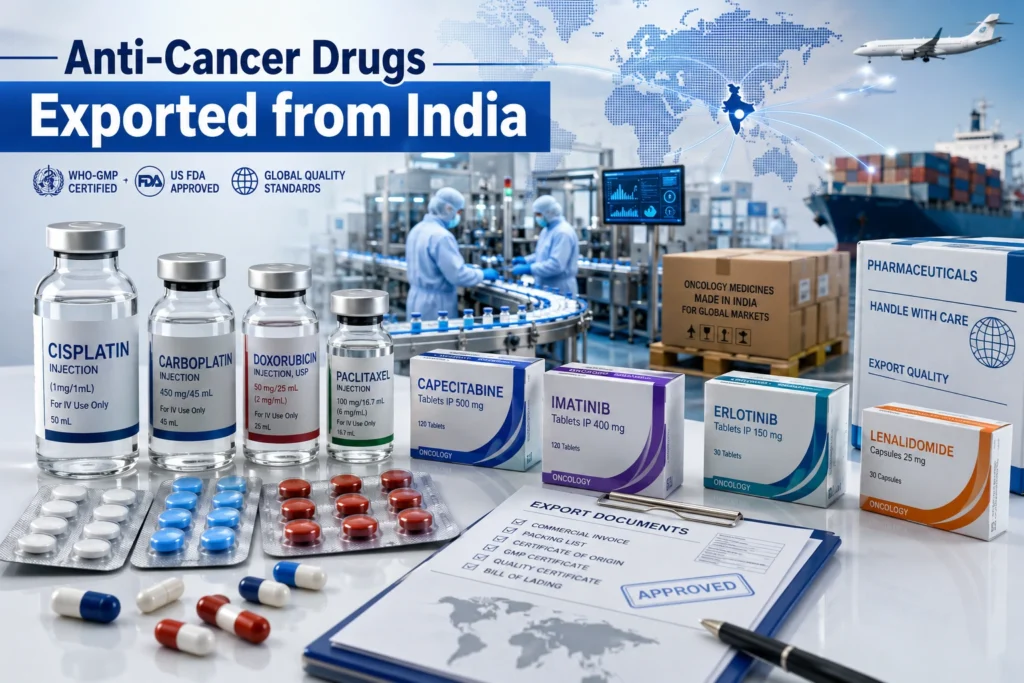
India has emerged as one of the most trusted sources of pharmaceutical products across the globe, and nowhere is this more evident than in the oncology segment. The country’s pharmaceutical sector has built a formidable reputation for delivering high-quality, affordable, and internationally certified anti-cancer drugs to patients and healthcare systems worldwide. As the global burden of cancer continues to rise, the demand for cost-effective treatment options has never been more urgent and Indian exporters are stepping up to meet that need.
From chemotherapy injectables to precision targeted therapy medicines, India exports an extensive range of oncology formulations to over 200 countries. This article explores the full landscape of anti-cancer drug exports from India covering the types of medicines exported, the key markets served, the certifications that back these products, and the factors that make Indian oncology suppliers a preferred choice for hospitals, distributors, and healthcare governments across the world.
Why India is a Global Hub for Anti-Cancer Drug Exports
India’s dominance in the pharmaceutical export market is not accidental it is the result of decades of investment in manufacturing infrastructure, skilled scientific talent, regulatory compliance, and strategic cost management. The oncology pharmaceutical segment specifically benefits from several interconnected advantages.
Affordable Generic Oncology Medicines
One of India’s strongest advantages in the global oncology market is its ability to manufacture generic cancer medicines at a fraction of the cost charged by Western pharmaceutical companies. Generic oncology drugs from India can be 60 to 90 percent cheaper than their branded equivalents, making them accessible to healthcare systems in developing nations, low-income regions, and even developed economies seeking to manage rising medical costs. This price competitiveness does not come at the expense of quality Indian manufacturers maintain strict standards across formulation, packaging, and active pharmaceutical ingredient (API) sourcing.
WHO-GMP and US FDA Certified Manufacturing
Trust is the foundation of any pharmaceutical trade relationship, and Indian oncology exporters have earned that trust through rigorous international certifications. Many Indian pharmaceutical manufacturers hold WHO-GMP (Good Manufacturing Practice) approval, US FDA clearance, EU GMP certification, and ISO accreditation. These certifications validate the safety, efficacy, and consistency of the manufacturing process giving international buyers the assurance they need when importing life-saving medicines.
Strong Pharmaceutical Export Network
India has developed a highly organized pharmaceutical export ecosystem with well-established trade routes, logistics infrastructure, and regulatory expertise. Indian exporters are experienced in handling complex documentation, cold chain requirements, and country-specific import regulations making the export process smooth for international partners. The country’s pharmaceutical clusters in Hyderabad, Mumbai, Ahmedabad, and Baddi are recognized globally as centers of oncology manufacturing excellence.
Types of Anti-Cancer Drugs Exported from India
India’s oncology export portfolio is comprehensive, covering virtually every major category of cancer treatment. Whether a healthcare provider is seeking standard chemotherapy protocols or the latest in precision medicine, Indian exporters offer a wide range of solutions.
Chemotherapy Medicines
Chemotherapy remains a cornerstone of cancer treatment globally. Indian manufacturers produce and export a wide spectrum of chemotherapy drugs in both injectable and oral forms. Injectable chemotherapy agents such as Cisplatin, Carboplatin, Doxorubicin, and Paclitaxel are exported in large volumes to hospitals and oncology centers. Oral chemotherapy formulations such as Capecitabine and Temozolomide are also widely available from Indian exporters in tablet and capsule forms, offering patients convenience alongside therapeutic effectiveness.
Targeted Therapy Medicines
Targeted therapies represent the next frontier of cancer care, designed to attack specific molecular targets within cancer cells while minimizing damage to healthy tissue. India has made significant strides in manufacturing and exporting generic versions of targeted therapy drugs. Medicines such as Imatinib (for chronic myeloid leukemia), Erlotinib, and Gefitinib (for lung cancer) are among the most demanded Indian oncology exports, offering patients in developing countries access to precision cancer treatment at accessible prices.
Immunotherapy Drugs
Immunotherapy has transformed cancer treatment in recent years by harnessing the power of the immune system to fight tumors. India’s pharmaceutical companies are increasingly entering the immunotherapy space, manufacturing biosimilars and immunomodulatory drugs for export. As global awareness about immunotherapy grows, Indian exporters are positioned to supply affordable alternatives to expensive branded immunotherapy agents that many healthcare systems cannot afford.
Hormonal Therapy Medicines
Hormonal treatments are essential for managing hormone-receptor-positive cancers, especially breast and prostate cancer. Indian pharmaceutical exporters supply a range of hormonal cancer treatment drugs including Tamoxifen, Anastrozole, Letrozole, and Enzalutamide. These medicines are in consistent demand across international markets and are exported both in bulk and in finished dosage form.
Top Anti-Cancer Drugs Exported from India
Generic Oncology Injections:
- Cisplatin used in lung, bladder, and testicular cancers
- Carboplatin a widely used platinum-based chemotherapy agent
- Doxorubicin a broad-spectrum chemotherapy injectable
Targeted Therapy Medicines:
- Imatinib for CML and gastrointestinal stromal tumors
- Erlotinib for non-small cell lung cancer
- Gefitinib EGFR inhibitor for lung cancer
- Lenalidomide for multiple myeloma
Oral Anti-Cancer Medicines:
- Capecitabine oral chemotherapy for breast and colorectal cancer
- Temozolomide for brain tumors and glioblastoma
Major Countries Importing Anti-Cancer Drugs from India
India’s anti-cancer drug exports reach virtually every continent, with particularly strong presence in the following regions:
African Countries
Africa represents one of the fastest-growing markets for Indian oncology exports. Nations such as Nigeria, Kenya, Ethiopia, Tanzania, and South Africa face a growing cancer burden but have limited domestic pharmaceutical manufacturing capacity. Indian exporters fill this critical gap by supplying affordable, quality-certified cancer medicines that would otherwise be financially out of reach for most African healthcare systems and patients.
Middle East and UAE
The Middle East, particularly the UAE, Saudi Arabia, and Kuwait, imports significant volumes of oncology medicines from India. These markets value the combination of quality certifications and competitive pricing that Indian exporters offer. India’s geographic proximity and well-established trading relationships with Gulf countries further facilitate smooth pharmaceutical trade.
Europe and Latin America
Several European countries and Latin American nations source generic oncology medicines from India, particularly where public health budgets are under pressure. Countries like Brazil, Colombia, Ukraine, and Romania actively import Indian cancer medicines. EU-GMP certified Indian manufacturers are especially preferred for regulated European markets.
Southeast Asian Markets
Vietnam, Myanmar, Philippines, Bangladesh, and Sri Lanka are among the Southeast Asian markets with growing dependence on Indian pharmaceutical exports, including oncology medicines. The rapidly expanding healthcare infrastructure in these countries continues to drive demand for reliable, affordable anti-cancer treatment options from Indian suppliers.
Benefits of Importing Oncology Medicines from India
Healthcare organizations and pharmaceutical distributors that import anti-cancer drugs from India gain multiple strategic and economic advantages:
- Competitive pricing that significantly reduces per-patient treatment costs
- Reliable bulk supply capability backed by large-scale manufacturing plants
- International certifications (WHO-GMP, US FDA, ISO) assuring quality compliance
- Extensive product portfolio covering all major oncology treatment categories
- Advanced manufacturing facilities with cold chain and sterile production capabilities
- Responsive export teams with expertise in regulatory documentation and customs processes
- Timely global delivery supported by established logistics partnerships
How to Choose the Right Anti-Cancer Drug Exporter in India
Selecting a trustworthy oncology medicine exporter from India requires careful due diligence. Here is what international buyers should evaluate:
Verify Certifications
A credible oncology exporter must hold valid WHO-GMP certification, US FDA approval where applicable, and ISO accreditation. These are not optional they are the minimum baseline for any international pharmaceutical trade. Ask for certificate copies and verify their validity directly with the issuing authority if needed.
Check Export Experience
Experience matters in pharmaceutical exports. Look for companies with a proven track record of supplying to your target region, familiarity with your country’s import regulations, and established relationships with customs and logistics partners. Exporters with global supply capabilities and regulatory expertise are better positioned to handle complex trade requirements.
Product Availability and Packaging
Oncology medicines often require specific storage and transport conditions. Confirm that the exporter has proper cold chain handling infrastructure, tamper-proof and compliant packaging, and experience with temperature-sensitive biologics and injectable preparations. Packaging should meet both international standards and your country’s local labeling requirements.
Customer Support and Documentation
Reliable pharmaceutical exporters provide comprehensive export documentation including Certificate of Analysis (CoA), Certificate of Origin, regulatory dossiers, and country-specific import support. Strong after-sales support and a dedicated regulatory affairs team are indicators of a professional export company.
Challenges in Anti-Cancer Drug Export Business
Despite India’s strengths, the oncology export business comes with its own set of challenges that exporters and buyers must navigate together:
- Regulatory approvals: Each importing country has its own drug registration requirements, which can be time-consuming and complex to fulfill.
- Temperature-sensitive logistics: Many oncology drugs, especially biologics and injectables, require strict cold chain management throughout the supply journey.
- International compliance: Keeping up with evolving global pharmaceutical regulations across multiple markets demands dedicated regulatory expertise.
- Supply chain management: Ensuring uninterrupted supply of APIs and finished formulations during global disruptions remains a constant challenge.
- Patent and licensing considerations: Navigating compulsory licensing, patent disputes, and IP agreements is essential for exporting certain newer oncology molecules.
Future of Oncology Medicine Export from India
The outlook for India’s anti-cancer drug export industry is exceptionally promising. Several macro-level trends are converging to create a powerful growth environment for Indian oncology exporters:
The global cancer burden is projected to increase significantly over the next two decades, particularly in Africa and Asia. This rising patient population will fuel demand for affordable treatment medicines that India is uniquely positioned to supply. Simultaneously, the patent cliff on many blockbuster oncology drugs is opening the door for Indian generic manufacturers to produce and export these molecules at scale.
India’s pharmaceutical companies are also investing heavily in biosimilars and next-generation targeted therapies, building the scientific and manufacturing capabilities needed to compete in the premium oncology segment. Government initiatives to promote pharmaceutical exports through dedicated export promotion councils and manufacturing incentive schemes further strengthen the industry’s growth trajectory.
As global healthcare systems increasingly prioritize value-based medicine procurement, Indian oncology exporters with their combination of quality, affordability, and certification are positioned to become an even more indispensable part of the global cancer care supply chain.
Conclusion
India’s role as a leading exporter of anti-cancer drugs reflects decades of investment, expertise, and commitment to global health. The country’s oncology pharmaceutical industry combines the affordability that low- and middle-income markets urgently need with the quality standards that regulated international markets demand. From chemotherapy injectables to targeted therapy tablets, Indian exporters offer a comprehensive range of oncology medicines backed by internationally recognized certifications.
For hospitals, governments, pharmaceutical distributors, and healthcare organizations worldwide, partnering with a trusted Indian oncology medicine exporter means gaining access to life-saving treatments at costs that make cancer care genuinely accessible. As the global fight against cancer intensifies, India’s pharmaceutical export industry stands ready to play a central and expanding role.
Whether you are exploring import partnerships for the first time or looking to diversify your oncology medicine supply chain, India offers a proven, reliable, and scalable solution.
Frequently Asked Questions (FAQs)
Q1: Why are anti-cancer drugs exported from India in such high global demand?
Indian anti-cancer medicines combine therapeutic effectiveness with significant cost advantages. They are manufactured under WHO-GMP and US FDA-certified conditions, making them trusted by healthcare systems in both regulated and emerging markets. The price difference compared to branded Western medicines often 70 to 90 percent lower makes Indian oncology exports a practical solution for expanding cancer care access globally.
Q2: Which anti-cancer medicines are most commonly exported from India?
Among the most frequently exported oncology medicines are Imatinib, Cisplatin, Carboplatin, Doxorubicin, Paclitaxel, Gefitinib, Erlotinib, Capecitabine, Temozolomide, and Lenalidomide. These medications address various cancer types such as lung, breast, blood, brain, and gastrointestinal cancers.
Q3: Which countries are the largest importers of oncology medicines from India?
India exports anti-cancer drugs to a wide range of countries including Nigeria, Kenya, South Africa, UAE, Saudi Arabia, Brazil, Colombia, Vietnam, Philippines, Myanmar, Ukraine, and many more. Africa and Southeast Asia represent the highest growth regions, while the Middle East and parts of Europe also represent significant importing markets.
Q4: Are Indian generic cancer medicines safe and clinically effective?
Yes. Generic medicines manufactured in India must demonstrate bioequivalence with the reference branded products, meaning they deliver the same active ingredients at the same concentration and with the same clinical effect. Manufacturing facilities are audited by international bodies including WHO, US FDA, and EU authorities to ensure consistent quality standards.
Q5: What certifications should a reliable oncology medicine exporter hold?
At a minimum, a trustworthy Indian oncology exporter should hold WHO-GMP certification, a valid pharmaceutical manufacturing license issued by Indian regulatory authorities, and relevant ISO certifications. For exporters targeting the US market, US FDA registration is essential. EU-GMP certification is required for European market access. Always request and verify these certificates before finalizing an import agreement.
Q6: How can an international buyer start importing anti-cancer drugs from India?
Begin by identifying a licensed pharmaceutical exporter in India with proven experience in oncology medicines and a strong certification portfolio. Evaluate their product range, packaging standards, cold chain capabilities, and regulatory documentation support. Request product samples and CoA documents for quality review. Your exporter should assist with dossier preparation, country registration, and shipping logistics to ensure a compliant and efficient import process.