

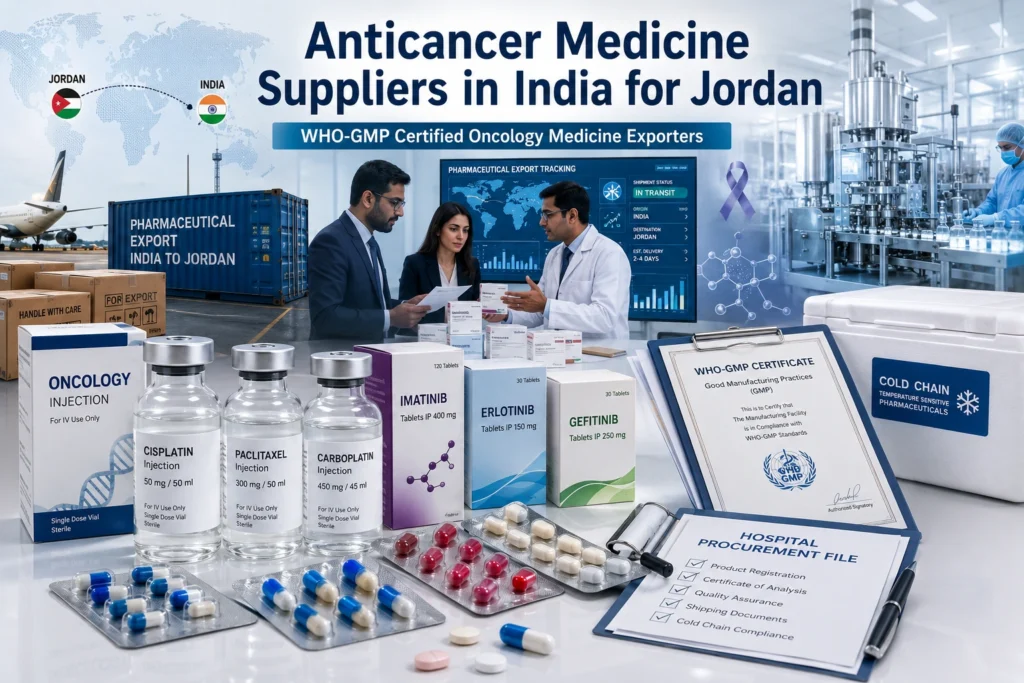
The oncology pharmaceutical landscape in Jordan has changed dramatically over the past decade. Public and private hospitals across Amman and beyond are handling rising cancer caseloads, and the demand for chemotherapy drugs, targeted therapy agents, and immunotherapy medicines has grown at a pace that domestic production alone cannot meet. To bridge this gap, Jordanian healthcare procurement teams have turned increasingly to India, one of the world’s most capable pharmaceutical manufacturing nations.
India produces a staggering volume of generic oncology medicines that are molecularly identical to their branded counterparts yet available at a fraction of the price. For a hospital balancing budget constraints against the clinical imperative to deliver world-class cancer care, that combination is difficult to overlook. This guide explains exactly why Indian suppliers have become the preferred source for anticancer medicines in Jordan, what features distinguish the best suppliers, and how hospital procurement teams can make confident, well-informed sourcing decisions.
Why Jordan Hospitals Prefer Anticancer Medicines from India
Affordable Pricing Compared to Western Markets
A single cycle of cisplatin-based chemotherapy sourced from a European originator brand can cost three to five times more than the identical molecule manufactured in India under WHO-GMP conditions. Indian pharmaceutical companies leverage low-cost raw material procurement, efficient production infrastructure, and high manufacturing volumes to deliver cost-effective chemotherapy medicines without compromising quality. For Jordan hospitals operating under health ministry budgets or insurance reimbursement caps, this pricing difference translates directly into greater patient access and better resource allocation across oncology departments.
Generic oncology drugs from India also allow hospitals to treat more patients per budget cycle. A hospital that saves 40 percent on each carboplatin order can redirect those savings toward supportive care, diagnostics, or newer-generation medicines for patients who need them most.
High-Quality Manufacturing Standards
Quality is never a secondary consideration in oncology. Substandard medicines can harm patients, trigger regulatory penalties, and expose hospitals to liability. Leading Indian oncology medicine manufacturers operate WHO-GMP certified facilities that are regularly audited by international bodies. Many have also received approval from the US FDA, the European Medicines Agency, and India’s own DCGI, demonstrating consistent adherence to globally recognized pharmaceutical standards.
These certifications are not formalities; they require documented batch records, validated cleaning processes, qualified personnel, and stability data proving that medicines retain potency throughout their shelf life. When a Jordan hospital imports from a certified Indian supplier, it receives medicines whose manufacturing history is traceable and whose quality has been independently verified.
Wide Range of Oncology Products
India’s pharmaceutical industry covers the full spectrum of cancer treatment modalities. Hospitals can source chemotherapy injections such as paclitaxel and carboplatin, oral targeted therapy medicines like imatinib and erlotinib, immunotherapy agents, hormone-based cancer treatments, and supportive oncology medications all from a single Indian export partner. This breadth simplifies procurement, reduces the number of vendor relationships a hospital must manage, and ensures continuity when a specific molecule is needed urgently.
Reliable Export and Global Supply Chain
Established Indian pharmaceutical exporters have built logistics networks specifically designed for international pharmaceutical distribution. They work with certified freight partners experienced in handling temperature-sensitive oncology injectables, maintain real-time shipment tracking, and understand the documentation requirements of Jordan’s regulatory authorities. Bulk medicine delivery for hospitals is handled with dedicated timelines, minimizing the risk of stockouts that could interrupt treatment protocols.
Features of the Best Anticancer Medicine Suppliers in India
Not every pharmaceutical exporter meets the standard required for oncology supply to hospitals. The following characteristics separate genuinely capable suppliers from those who merely claim the title.
- WHO-GMP and ISO Certifications: Verified certifications from internationally recognized bodies are the baseline. Always request original certificates with issue and expiry dates.
- Strong Export Experience in the Middle East: Suppliers familiar with the Jordan and broader GCC regulatory environment understand import licensing, Arabic labeling requirements, and customs clearance pathways that less experienced exporters often stumble over.
- Bulk Supply Capacity for Hospitals: Hospital oncology departments require consistent, large-volume supply. The supplier must demonstrate warehouse capacity, production scheduling, and the ability to fulfill repeat bulk orders without lead-time variance.
- Quality Assurance and Product Authenticity: Every batch should come with a certificate of analysis from an accredited laboratory. Reliable suppliers also provide shelf-life data and storage condition guidance aligned with international pharmacopoeias.
- Regulatory Documentation Support: Import into Jordan requires product registration documents, certificates of pharmaceutical product (CPP), and compliance declarations. The best suppliers maintain dedicated regulatory affairs teams who prepare and submit these documents accurately.
- Competitive Pricing for Jordan Healthcare Providers: Transparent pricing structures, volume discounts for hospital contracts, and stable pricing across order cycles are hallmarks of a professional oncology pharmaceutical exporter.
Types of Anticancer Medicines Exported from India to Jordan
Chemotherapy Medicines
Conventional chemotherapy agents remain the backbone of oncology protocols in most Jordanian hospitals. The most commonly exported molecules include:
- Cisplatin: A platinum-based cytotoxic agent widely used in lung, bladder, ovarian, and head-and-neck cancers. Indian manufacturers produce high-purity cisplatin injections at volumes suitable for hospital bulk procurement.
- Carboplatin: Often preferred over cisplatin for its comparatively manageable side-effect profile, carboplatin is used across multiple solid tumor types and is available in multiple concentration presentations.
- Paclitaxel: A taxane-class agent critical in breast, ovarian, and non-small cell lung cancer treatment. India exports both standard paclitaxel injections and albumin-bound formulations.
Targeted Cancer Therapy Drugs
Targeted therapies act on specific molecular pathways driving cancer growth, offering greater precision and often reduced systemic toxicity compared to conventional chemotherapy. Key molecules exported from India include:
- Imatinib: The foundational treatment for chronic myeloid leukemia and certain gastrointestinal stromal tumors. Generic imatinib from India provides Jordan hospitals with access to this life-changing medicine at sustainable cost.
- Erlotinib: An EGFR inhibitor used in non-small cell lung cancer and pancreatic cancer, available in oral tablet form with Indian manufacturers maintaining tight bioequivalence data.
- Gefitinib: Another EGFR-targeted agent commonly prescribed for EGFR-mutation-positive lung cancer, widely available from certified Indian exporters.
Immunotherapy Medicines
Checkpoint inhibitors have transformed outcomes across multiple cancer types. While these biologic medicines involve more complex manufacturing, Indian pharmaceutical companies are actively developing biosimilar and generic versions:
- Pembrolizumab: A PD-1 inhibitor with approvals spanning melanoma, lung cancer, head-and-neck cancer, and other tumor types. Biosimilar versions are advancing through Indian regulatory pipelines.
Immunotherapy Medicines
Checkpoint inhibitors have transformed outcomes across multiple cancer types. While these biologic medicines involve more complex manufacturing, Indian pharmaceutical companies are actively developing biosimilar and generic versions:
- Pembrolizumab: A PD-1 inhibitor with approvals spanning melanoma, lung cancer, head-and-neck cancer, and other tumor types. Biosimilar versions are advancing through Indian regulatory pipelines.
- Nivolumab: Another PD-1 inhibitor used in multiple oncology indications. Access to affordable nivolumab equivalents is critical for Jordanian oncology centers managing high-cost immunotherapy protocols.
Oncology Injectables and Generic Anticancer Tablets and Capsules
Beyond the headline molecules, Indian exporters supply the full supporting range: antiemetics, growth factors, analgesics for palliative oncology, and a broad catalog of oral anticancer tablets and capsules. This comprehensive portfolio means Jordan hospitals can consolidate oncology procurement with fewer suppliers, achieving better pricing leverage and simpler supply chain management.
How to Choose the Right Oncology Medicine Supplier for Jordan Hospitals
Verify Certifications and Compliance
Request copies of WHO-GMP certificates, ISO certifications, and any national regulatory approvals. Cross-check certificate validity dates and confirm they cover the specific manufacturing site, not just the company’s head office. For Jordan, verify that the supplier can provide a certificate of pharmaceutical product acceptable to the Jordan Food and Drug Administration.
Check Product Portfolio and Export Experience
A supplier’s export history to Middle East markets speaks directly to their operational readiness for your procurement needs. Ask for a reference list of hospitals or distributors they have supplied in Jordan or neighboring countries. Review their product catalog for breadth and confirm that the specific molecules your oncology department requires are available.
Confirm Packaging, Cold Chain, and Documentation Support
Many oncology injectables require refrigerated transport and storage. Verify that the supplier has validated cold chain logistics partnerships and that their packaging materials meet international pharmaceutical transport standards. Request sample regulatory documentation packages to assess whether their quality dossiers are organized, complete, and formatted for straightforward submission to Jordanian authorities.
Compare Pricing and Delivery Timelines
Obtain formal quotations from at least three suppliers for your key molecules. Compare not only unit prices but also minimum order quantities, delivery lead times, and penalties for shipment delays. The lowest price per unit may become the most expensive option if late deliveries force your hospital to source emergency stock at premium rates.
Key Benefits of Importing Anticancer Medicines from India
Summarizing the core value proposition for Jordan hospital procurement teams:
- Affordable treatment solutions that allow hospitals to extend oncology services to more patients without exceeding budget constraints.
- Access to high-quality generic oncology medicines that meet international pharmacopoeial standards and are backed by bioequivalence data.
- Large-scale production capabilities ensuring that even high-volume hospital requirements can be fulfilled from a single supplier relationship.
- Consistent supply availability throughout the year, reducing the disruption risk that plagues procurement from markets with seasonal production limitations.
- Customized hospital bulk orders with flexible packaging, labeling in English or Arabic as required, and delivery schedules aligned to hospital inventory cycles.
- International export expertise, including regulatory documentation support, customs coordination, and post-shipment quality audit services.
Challenges in Oncology Medicine Import and How Indian Suppliers Solve Them
Regulatory Compliance
Every country’s drug regulatory authority maintains specific import requirements. Indian pharmaceutical exporters with dedicated regulatory teams prepare complete dossiers including product registration files, certificates of analysis, WHO-type certificates, and free sale certificates, reducing the administrative burden on hospital procurement departments and shortening customs clearance timelines.
Temperature-Sensitive Medicine Shipping
Oncology injectables such as paclitaxel and monoclonal antibody formulations must maintain specific temperature ranges from the manufacturing facility to the hospital pharmacy. Leading Indian exporters partner with GDP-certified freight forwarders, use validated insulated packaging, and provide temperature data loggers with each cold chain shipment so hospital receiving teams can confirm integrity on arrival.
Product Availability, Inventory, and Timely Delivery
Oncology treatment delays caused by medicine unavailability carry serious clinical consequences. Reputable Indian suppliers maintain safety stock for high-demand oncology molecules, provide advance shipment notifications, and offer emergency order processing for critical medications. Electronic order tracking portals give hospital procurement teams real-time visibility into shipment status, removing the uncertainty that characterizes less professional supply arrangements.
Why Rizochem Pharmaceuticals is a Trusted Oncology Medicine Exporter
Among India’s established pharmaceutical exporters serving the Middle East healthcare sector, Rizochem Pharmaceuticals has built a recognized presence in oncology medicine supply for Jordan hospitals and regional distributors.
- Wide Oncology Product Portfolio: Rizochem maintains an extensive catalog covering chemotherapy injections, targeted therapy tablets, oral oncology capsules, and supportive care medicines, enabling Jordan hospitals to consolidate procurement under a single reliable partner.
- International Export Standards: All products are sourced from WHO-GMP certified manufacturing facilities with the necessary regulatory documentation prepared to meet Jordanian import requirements, reducing compliance risk for hospital procurement teams.
- Reliable Bulk Supply for Hospitals: With established logistics networks and inventory management processes calibrated for hospital-scale orders, Rizochem delivers consistent supply without the lead-time variability that disrupts treatment schedules.
- Competitive Pricing: Transparent pricing structures with volume-based benefits allow Jordan hospitals to plan oncology budgets accurately and achieve genuine cost savings compared to alternative sourcing markets.
- Dedicated Support for Jordan Healthcare Buyers: A responsive export support team assists with documentation queries, customs coordination, and order customization, making the procurement experience straightforward for hospital pharmacy and supply chain teams.
Conclusion
India’s pharmaceutical industry offers Jordan hospitals a compelling combination of affordability, quality, and product breadth that no other sourcing region currently matches for oncology medicines. From established chemotherapy agents like cisplatin and paclitaxel to emerging targeted therapies and immunotherapy formulations, Indian manufacturers supply the full spectrum of cancer treatment medicines under internationally recognized quality certifications.
For hospital procurement and pharmacy teams, the key is selecting a supplier with verified certifications, demonstrated Middle East export experience, robust documentation capabilities, and the logistics infrastructure to deliver temperature-sensitive oncology products reliably. Prioritizing these factors over price alone ensures that the medicines reaching your oncology department meet the quality standards your patients depend on.
Whether your facility is expanding oncology services, consolidating vendor relationships, or seeking a more cost-effective route to high-quality cancer medicines, partnering with a trusted Indian pharmaceutical exporter represents a strategically sound decision for Jordan’s healthcare future.
Frequently Asked Questions
Q1: Why do Jordan hospitals import anticancer medicines from India?
Jordanian hospitals source anticancer medicines from India because Indian pharmaceutical manufacturers offer significantly lower prices than Western markets while maintaining WHO-GMP certified quality standards. The wide product range and established export infrastructure make India the most practical and cost-effective source for hospital oncology procurement in the region.
Q2: Are Indian anticancer medicines approved for international export?
Yes. Many Indian oncology medicine manufacturers hold WHO-GMP certification alongside approvals from the US FDA, the European Medicines Agency, and other international regulatory bodies. These certifications confirm that their manufacturing processes and product quality meet globally accepted pharmaceutical standards, making the medicines eligible for export to regulated markets including Jordan.
Q3: Which anticancer medicines are commonly exported from India to Jordan?
The most frequently exported oncology medicines include platinum-based chemotherapy agents such as cisplatin and carboplatin, taxanes including paclitaxel, oral targeted therapy drugs like imatinib, erlotinib, and gefitinib, immunotherapy preparations, and the full range of oncology injectables and supportive care medications used in standard hospital treatment protocols.
Q4: How can Jordan hospitals choose the best oncology medicine supplier in India?
Hospitals should verify certifications, check the supplier’s Middle East export track record, review their product portfolio for completeness, confirm cold chain logistics capability, compare pricing across multiple suppliers, and assess the quality of regulatory documentation they provide before committing to a supply agreement.
Q5: Are generic anticancer medicines from India safe and effective?
Indian generic anticancer medicines manufactured in WHO-GMP certified facilities are required to demonstrate bioequivalence to the reference originator product, meaning they deliver the same therapeutic effect under the same conditions. They are used extensively across healthcare systems in Europe, the Middle East, Asia, and Africa, and their safety and efficacy record is well established.
Q6: What documents are required for importing anticancer medicines from India to Jordan?
Standard import documentation includes a commercial invoice, packing list, certificate of analysis for each batch, WHO-type certificate of pharmaceutical product, product registration documents approved by the Jordan Food and Drug Administration, air waybill or bill of lading, and any applicable export health certificates. Reputable Indian suppliers maintain regulatory affairs teams that prepare and provide these documents as part of the standard export process.